
What Students Learn at a Leadership Camp for High School
目录
Summer 2026 S2
For high school students, some of the most valuable leadership lessons happen when there is no script, no answer key, and no teacher standing nearby to make every decision. Students have to communicate with people who think differently, decide what to do when information is incomplete, work through disagreement, take responsibility for their part of a project, and adapt when the original plan does not work.
That is where a meaningful leadership camp can offer something different from a traditional classroom experience.
During the 2026 China Microfinance Project Session 2, students encountered leadership through community research, teamwork, cultural interaction, problem-solving, reflection, and project presentation. The experience placed students in situations where leadership was not simply discussed as an abstract quality. It had to be practiced through daily decisions.
What Is a Leadership Camp?
A leadership camp is a structured learning experience designed to help students develop skills such as communication, collaboration, decision-making, adaptability, responsibility, self-awareness, and confidence through active participation.
Unlike a traditional academic course, a leadership camp often places greater emphasis on situations in which students must apply those skills rather than simply learn their definitions. Students may work in teams, conduct research, interact with communities, complete service projects, solve unfamiliar problems, prepare presentations, or manage responsibilities over an extended period.
The important difference is participation. A student can read about teamwork without ever having to resolve a disagreement with teammates. A student can listen to a lecture about communication without ever needing to explain an idea to someone from a different cultural background. A student can study decision-making without experiencing what it feels like to make a choice when not every piece of information is available.
A strong leadership camp creates opportunities for students to encounter these situations directly. The goal is not to produce one fixed personality type called “a leader.” Instead, students begin learning how they respond to challenges, how they contribute to groups, and what skills they need to strengthen.
What Makes a Leadership Camp for High School Students Meaningful?
High school is an especially important stage for leadership development because students are beginning to take greater ownership of their academic, extracurricular, and personal decisions. They may be leading clubs, organizing projects, participating in competitions, preparing for college, or managing responsibilities that require more independence than they had in middle school.
At the same time, many students are still discovering how they communicate under pressure, how they respond to disagreement, and how comfortable they are taking initiative. A leadership camp for high school students can create a concentrated environment in which these abilities are practiced repeatedly rather than discussed only in theory.
What makes the experience meaningful is not constant success. In fact, some of the strongest learning often happens when students encounter something difficult. A group may struggle to organize information. A conversation may not go as expected. A recommendation may need to be reconsidered. A presentation may reveal a gap in the team’s reasoning.
These situations require students to adjust. Over time, they begin to understand that leadership does not mean preventing every problem. It often means responding to problems thoughtfully when they appear.
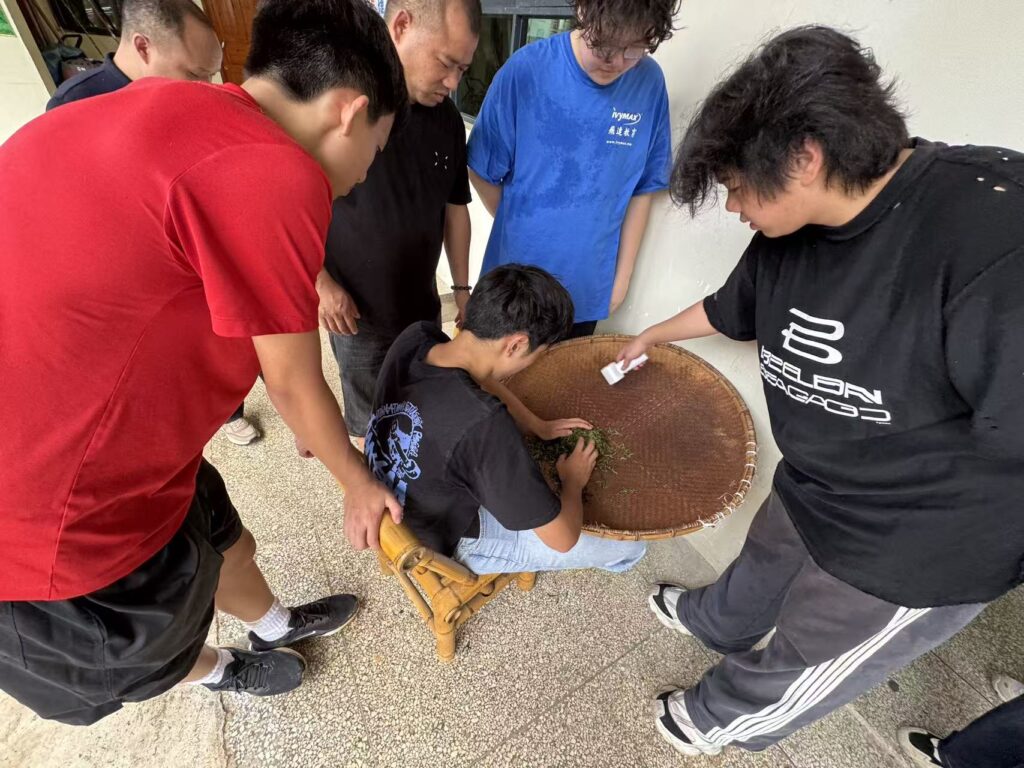
Leadership Starts Before Anyone Takes Charge
Students sometimes imagine leadership as the moment when one person steps forward and tells everyone else what to do. That can be one form of leadership, but it is far from the only one.
Leadership can begin with noticing.
A student may realize that the group is missing an important piece of information. Another may see that one teammate has not had an opportunity to contribute. Someone may organize confusing notes into a structure the entire group can understand. Another student may question an assumption before the team builds its recommendation around it.
None of these actions requires a formal title.
This is especially important for students who do not naturally see themselves as outgoing or dominant. Leadership is not reserved for the loudest person in the room. A thoughtful student who listens carefully, identifies a problem, and helps a group improve its decision may be demonstrating leadership in a powerful way.
A meaningful camp gives students different opportunities to discover what leadership looks like in practice. Some students may become stronger speakers. Others may discover that they are effective organizers, researchers, listeners, mediators, or problem-solvers.
Learning to Communicate Before Learning to Lead
Communication is one of the first skills students discover they cannot avoid in a leadership environment.
It affects nearly everything else.
Students need to communicate when dividing responsibilities, asking research questions, discussing observations, presenting recommendations, requesting help, and working through disagreement. When an international or cross-cultural component is added, communication becomes even more complex.
Students may need to adjust the way they ask a question. They may need to explain an idea more clearly when another person does not immediately understand. They may realize that the same words, tone, or communication style can be interpreted differently depending on the setting.
These situations teach an important leadership lesson: communication is not simply about expressing yourself. It is also about determining whether another person actually understood what you intended to communicate.
Students who begin the program focused mainly on what they want to say often become more aware of what they need to hear. They learn to ask follow-up questions, notice when information is unclear, and listen long enough to understand the perspective behind an answer.
Listening Is an Active Leadership Skill
Students are often encouraged to speak confidently, but effective leadership requires equally strong listening.
Listening is not passive. It requires attention, patience, and the willingness to let new information influence your thinking.
During a real-world project, students may enter a conversation expecting one answer and receive something completely different. A weak listener waits for the other person to finish and then returns to the original script. A stronger listener notices what changed and asks a better question.
This ability becomes especially important when students are learning from communities different from their own. They cannot assume that their initial interpretation is correct. They need to pay attention not only to facts but also to context, priorities, and perspectives.
Over time, listening can change the way students understand leadership. The student who speaks the most is not always the person helping the group move forward. Sometimes the strongest contribution is recognizing what everyone else missed.
Why Teamwork Is One of the Hardest Leadership Skills
Teamwork sounds simple until students have to do it.
In school projects, teamwork sometimes becomes little more than dividing an assignment into sections. One student writes the introduction, another creates slides, and everyone combines the pieces at the end. That may be efficient, but it does not necessarily teach collaboration.
Real teamwork requires more.
Students need to make decisions together. They need to explain why they support one idea over another. They must respond when someone completes work differently than expected. They may need to reorganize responsibilities when time becomes limited.
Different personalities can also create challenges. One student may speak quickly and frequently, while another needs more time before contributing. One person may want to move forward immediately, while someone else wants more evidence.
A leadership camp creates an opportunity for students to recognize these patterns and learn how to work with them. Effective teamwork does not require everyone to think or behave the same way. It requires a group to use different strengths without allowing those differences to prevent progress.
Leadership Does Not Mean Being the Loudest Person
Many students who are naturally quiet assume leadership activities are designed for extroverts.
That is a narrow definition of leadership.
A student who asks a precise question may redirect an entire discussion. A student who notices inconsistent information may protect the group from making a weak recommendation. A student who helps two teammates understand each other’s perspectives may prevent disagreement from becoming conflict.
These contributions may be less visible than giving a speech, but they matter.
This is one reason a leadership camp can be useful even for students who already consider themselves good communicators. The experience can expand their understanding of leadership beyond confidence and public speaking.
Strong leadership requires judgment. It requires knowing when to speak and when to listen, when to move forward and when to pause for additional information, and when to defend an idea versus when to change it.
Real-World Challenges Create Real Leadership Decisions
One of the limitations of simulated leadership exercises is that students often know a correct answer exists somewhere.
Real-world projects feel different.
In the China Microfinance Project, students encountered questions connected to communities, household circumstances, rural development, finance, and possible economic opportunities. These questions could not be answered simply by looking at the last page of a textbook.
Students had to gather information and decide what mattered. They needed to compare observations, ask follow-up questions, consider practical limitations, and determine whether an idea that sounded promising could actually make sense in context.
That uncertainty creates a powerful learning environment.
Students begin to understand that leadership decisions are rarely made with perfect information. The goal is not to wait until uncertainty disappears completely. The goal is to learn how much information is necessary before making a responsible decision.
How Microfinance Becomes a Leadership Exercise
At first glance, microfinance may seem primarily like a business or economics topic. For students participating in an applied project, however, it also becomes an exercise in judgment.
A possible financial recommendation raises questions beyond numbers. Students have to consider whether the idea is realistic, whether the available evidence supports it, what risks may exist, and whether they have understood the priorities of the people involved.
This forces students to distinguish between an idea they personally like and an idea that actually fits the situation.
That distinction is central to leadership.
Leaders frequently make decisions that affect other people. If they focus only on what sounds innovative or impressive, they may overlook practical realities. Students therefore learn that responsible problem-solving begins with understanding the people and conditions surrounding the problem.
The microfinance project gives students a setting in which financial reasoning and human context have to exist together. That combination makes it more than an economics exercise.
Leadership Means Making Decisions With Incomplete Information
School assignments often provide all the information students need. The challenge is determining how to use it.
Real life is different.
Sometimes information is missing. Sometimes two people provide different perspectives. Sometimes a student realizes halfway through a project that an important question was never asked.
These gaps can initially feel uncomfortable.
Students who are used to clear instructions may want someone to tell them exactly what information matters and when they have collected enough. In a leadership environment, they gradually learn to make those judgments themselves.
They begin asking more useful questions. What do we know? What are we assuming? What information would change our conclusion? Which missing details are essential, and which would simply be helpful?
This kind of thinking builds both independence and judgment.
Critical Thinking Is a Leadership Skill
Leadership is often described using words such as confidence, communication, initiative, and motivation. Critical thinking deserves the same attention.
Confidence without good judgment can create poor decisions more quickly.
Students need to know how to evaluate information, distinguish evidence from assumption, consider alternative explanations, and recognize the limitations of what they know.
During a project, students may feel certain about an interpretation until another interview or observation challenges it. Critical thinking allows them to revise the conclusion rather than selectively ignoring evidence that does not fit.
This is an important academic skill, but it is also an important leadership habit.
Good leaders do not simply defend their first idea. They are willing to change their minds when stronger information becomes available.
Cultural Awareness Changes How Students Solve Problems
International leadership experiences add another important dimension: students must consider whether the assumptions they bring from home apply in a different cultural environment.
An idea that appears practical from one perspective may not fit another community’s routines, priorities, resources, or expectations.
This requires students to become more culturally aware.
Cultural awareness is not about memorizing a list of differences between countries. It is about recognizing that context shapes behavior and decisions. Students learn that before evaluating why someone makes a particular choice, they need to understand the environment in which that choice is being made.
This can make students more thoughtful problem-solvers.
Instead of immediately asking, “Why don’t they do this?” students may begin asking, “What factors am I missing that make their decision reasonable in this context?”
That change in the question represents meaningful growth.
Confidence Is Built Through Participation
Leadership programs often promise to “build confidence,” but confidence is difficult to develop through encouragement alone.
Students become more confident when they repeatedly do difficult things and realize they can improve.
The first interview may feel uncomfortable. The first team discussion may be difficult to navigate. A student may initially hesitate before speaking in front of a group.
After several experiences, the situation begins to feel more manageable.
The student learns how to prepare. They know what questions to ask. They become more comfortable responding when something unexpected happens.
That kind of confidence is grounded in competence.
It does not mean the student is never nervous. It means they have enough experience to continue functioning even when they are.
How a Leadership Camp Builds Independence
Independence is another important outcome of an immersive leadership camp for high school students.
High school students are accustomed to having adults manage many parts of their schedule. In a more independent program environment, they are expected to keep track of responsibilities, prepare for activities, manage information, contribute to their teams, and respond appropriately when something changes.
Independence does not mean solving every problem alone.
In fact, one important part of maturity is knowing when to ask for help.
Students gradually learn the difference between immediately depending on an adult for every decision and recognizing when a situation genuinely requires guidance.
This balance becomes increasingly important as students move toward college, where professors, advisers, and mentors can provide support but students are expected to manage much more of their own academic lives.
Reflection Helps Students Discover Their Leadership Style
A student may complete many activities during a summer program without fully understanding what those experiences reveal about them.
Reflection creates that connection.
Students may realize that they are strong listeners but hesitant speakers. Another student may discover that they naturally organize groups but sometimes move too quickly before everyone contributes. Someone else may learn that they stay calm when plans change but need to improve time management.
These observations can help students develop a more accurate understanding of their leadership style.
The goal is not to assign every student a personality label. It is to help them recognize patterns.
Self-awareness allows students to strengthen what already works and identify habits that may limit their effectiveness.
Does Leadership Camp Help With College Applications?
A leadership camp can contribute to a student’s development, but simply attending one does not automatically create a stronger college application.
Admissions offices are interested in what students actually do with their opportunities.
A student who participates passively and leaves with little reflection may gain less than a student who takes responsibility, becomes interested in a new issue, continues exploring the topic afterward, or uses the experience to shape another meaningful project.
The strongest value comes from substance.
What responsibility did the student take on? What challenge did they face? What did they learn about themselves? Did they develop a new academic interest? Did the experience lead to continued action?
These questions are more meaningful than simply asking whether a leadership camp “looks good” on an application.
Turning Leadership Camp Into Long-Term Growth
A strong leadership camp does not teach students one formula for becoming a leader.
It gives them repeated opportunities to discover what effective leadership requires.
Students learn that communication includes listening. Teamwork includes disagreement. Confidence comes from practice. Independence includes knowing when to ask for help. Critical thinking sometimes requires changing your mind. Cultural awareness means recognizing that your own perspective is not the only one.
They also learn that leadership does not begin with a title.
It begins with responsibility.
For students participating in the China Microfinance Summer 2026 S2, leadership emerged through research, community interaction, teamwork, cultural learning, problem-solving, reflection, and presentation. Each stage required students to contribute in a different way.
Some moments asked them to speak. Others required them to listen. Sometimes they needed to make a decision, while at other times they needed to recognize that they did not yet have enough information.
Those experiences illustrate why a meaningful leadership camp for high school students should offer more than motivational workshops or a busy activity schedule. Students need opportunities to practice leadership in situations where their decisions, communication, preparation, and collaboration genuinely matter.
The result is not that every student leaves with the same leadership style.
The more valuable outcome is that students understand themselves better. They begin recognizing how they contribute to groups, what challenges them, where they need to grow, and how their actions affect other people.
That self-awareness can continue long after the camp ends.
Leadership development is not about teaching students to always take control. It is about preparing them to recognize when their contribution is needed, understand the people and circumstances around them, make thoughtful decisions, and take responsibility for what happens next.
By submitting this form, you are consenting to receive marketing emails from: IvyMax Inc, 41111 Mission Blvd., Suite 200, Fremont, CA, 94539, https://ivymax.com/. You can revoke your consent to receive emails at any time by using the SafeUnsubscribe® link, found at the bottom of every email. Emails are serviced by Constant Contact
对我们的项目感兴趣?
请填写表单,我们会尽快回复您,并提供详细信息,解答您的问题!