
2026 Summer Lab-on-a-Chip STEM Camp for High School Students
Table of Contents
2026 STEM Camp
Finding the right 2026 summer learning opportunity can help high school students explore potential college majors, develop practical technical skills, and experience how STEM concepts are applied through real engineering projects.
The 2026 Lab-on-a-Chip program offered students hands-on exposure to microfluidics, computer-aided design, electronics, chemistry, fabrication, device testing, and scientific communication in a university-based learning environment.
As a project-focused STEM camp for high school students, the program guided participants through several stages of the engineering process. Students developed designs, assembled components, fabricated a microfluidic device, prepared test solutions, calibrated the system, analyzed an unknown sample, and presented their findings.
What Is a Lab-on-a-Chip?
A lab-on-a-chip is a compact device designed to perform one or more laboratory functions on a small platform. These devices often rely on microfluidics, which involves controlling and analyzing very small amounts of liquid as they move through miniature channels.
Although the device itself may be small, the knowledge required to design and test it can involve several major areas of STEM. Students may need chemistry to understand concentration and dilution, engineering design to create a stable structure, electronics to support measurement, materials science to select appropriate substances, and data analysis to evaluate whether the device is functioning correctly.
Lab-on-a-chip technology can be connected to fields such as medical diagnostics, biomedical research, chemical testing, environmental monitoring, and biotechnology. Compact testing systems can help researchers analyze samples while using smaller quantities of materials than traditional laboratory procedures may require.
For high school students, a lab-on-a-chip project offers a useful introduction to interdisciplinary problem-solving. Rather than studying chemistry, engineering, electronics, and data analysis as unrelated subjects, students can see how these fields support one another within a single technical system.
Why a Project-Based 2026 Summer Program Matters
A strong 2026 summer STEM camp should provide more than a general introduction to science vocabulary. It should help students understand how engineers approach unfamiliar problems, evaluate different possibilities, test their assumptions, and improve a design based on evidence.
Project-based learning gives students a reason to apply what they are studying. When a student learns about concentration in a textbook, the concept may feel abstract. When that same student must prepare a solution that will later be used to calibrate a device, the calculation becomes part of a larger engineering objective.
The Lab-on-a-Chip program was structured around this kind of connection. Students learned technical concepts because they needed those concepts to complete a project. CAD modeling was relevant because students had to design components. Electronics instruction was useful because the system required wiring and assembly. Chemical analysis mattered because students needed to prepare and test solutions. Presentation skills became necessary because students eventually had to explain their work.
This approach can also help students develop greater independence. In a traditional classroom, there is often one correct answer and one expected method. In engineering, students may need to choose among several possible designs, determine why a component is not working, and decide what should be changed. They learn that technical progress often depends on thoughtful revision rather than immediate perfection.
Beginning With Orientation and Team Development
The program began with orientation, campus exposure, introductions, and team formation. These early activities helped students understand the schedule, meet the people they would be working with, and become familiar with the expectations of a structured engineering environment.
Team formation was an important part of the experience because modern engineering is highly collaborative. A single project may require people with different strengths, perspectives, and responsibilities. One student may feel confident with digital modeling, while another may be more comfortable with electronics or data organization. Successful teamwork requires students to communicate clearly, divide responsibilities fairly, and support the overall goal rather than focusing only on an individual task.
During the early stage of the camp, students also had to adjust to a faster and more independent learning environment. A high school STEM camp held in a university setting may feel different from a regular school day. Students are expected to listen carefully, follow laboratory procedures, ask questions, manage their time, and take greater responsibility for the quality of their work.
These initial experiences established the foundation for the technical work that followed. Before students could fabricate a device or interpret test results, they needed to understand how the program operated and how their team would approach the project.
Developing Design Thinking Through CAD
Computer-aided design, often called CAD, was one of the first technical areas introduced during the program. Students received training in digital design and practiced creating introductory models before applying those skills to more complex project components.
CAD allows students to develop a three-dimensional representation of an object before producing it physically. This process gives them an opportunity to review dimensions, consider how parts will fit together, and identify potential design problems before fabrication begins.
For students who are new to engineering, CAD can reveal an important lesson: design is not simply about appearance. A model must serve a function. The dimensions must be accurate, the structure must be stable, and the individual parts must support the performance of the complete system.
As students progressed, their design work became more closely connected to the lab-on-a-chip project. They considered components such as chip holders, housing structures, and masks used for channel design. Each component required careful thinking about alignment, accessibility, size, durability, and compatibility with the rest of the device.
Students also began to understand the value of iteration. A digital design may look correct at first but still require revision after closer review or physical testing. Engineering students must be willing to adjust measurements, reposition features, simplify a structure, or reconsider how a component will be assembled.
This iterative process teaches students not to become overly attached to their first idea. A successful design is often the result of multiple versions, each informed by new observations and feedback.
Exploring Microfluidics and Small-Scale Engineering
Microfluidics formed the scientific core of the Lab-on-a-Chip experience. Students learned how very small amounts of liquid can be directed through miniature channels and analyzed using a compact device.
At the microscale, fluid behavior requires precision. Small differences in channel dimensions, material quality, sample preparation, or liquid concentration can affect the final results. Students therefore needed to understand that accuracy was not an optional detail. It was central to whether the device could function reliably.
The study of microfluidics also helped students connect classroom science to emerging technology. Many high school students have experience measuring liquids in chemistry laboratories, but controlling fluid movement within tiny channels introduces a different level of complexity.
Students had to consider how the physical structure of the chip affected the movement of a sample. They also needed to understand how a measurable signal could be connected to the concentration of a substance within that sample.
This kind of learning is especially valuable for students interested in biomedical engineering or biotechnology because it demonstrates how engineering tools can be used to investigate biological or chemical questions. It also shows why interdisciplinary collaboration is common in modern research. A microfluidic device may require knowledge from chemistry, physics, materials science, electrical engineering, and data analysis.
Connecting Chemistry to a Functional Device
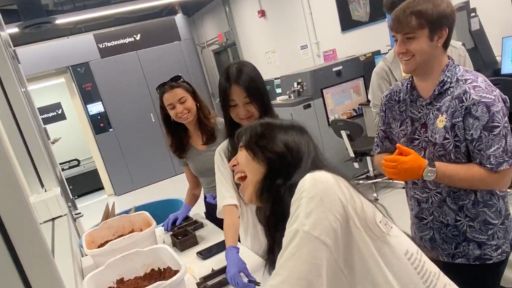
Chemical analysis was another important part of the program. Students studied concentration, dilution, reactions, sample preparation, and the role of fluorescein in device testing.
Fluorescein is a fluorescent compound that can be detected under appropriate conditions. By preparing solutions with known concentrations, students could observe how the device responded and use those responses during calibration.
This process transformed familiar chemistry concepts into practical tools. Concentration was no longer just a number calculated during an assignment. It became a known reference that students could use to evaluate the performance of their device.
Preparing chemical solutions also required careful laboratory technique. Students needed to measure accurately, follow instructions, label samples, and avoid contamination. A small error during preparation could affect the calibration process and make later results less reliable.
The project therefore demonstrated that engineering outcomes depend on the quality of every stage. A well-designed device may still produce confusing results if the samples are not prepared correctly. Similarly, accurate chemical preparation cannot compensate for a poorly assembled electronic system. Each part of the process supports the others.
Building Confidence With Arduino and Electronics
The 2026 summer experience also introduced students to Arduino systems and electronics. Arduino is widely used in educational and prototype development settings because it allows students to connect hardware components, collect information, and create responsive systems.
For students who had limited previous experience with electronics, this stage could be both exciting and challenging. They needed to understand how different components were connected, how wiring affected the system, and how an electrical problem could influence the performance of the entire device.
As the program progressed, students moved from basic electronic concepts to wiring and soldering activities. Soldering requires concentration, steady hand control, and attention to safety. It also gives students a more direct experience with hardware construction.
A connection that appears minor can have a significant effect on the final system. If a wire is loose, a component is incorrectly positioned, or a connection is incomplete, the device may not behave as expected. Students must then diagnose the problem instead of immediately assuming that the entire design has failed.
This is one of the most valuable lessons offered by a hands-on engineering camp for high school students. Technical confidence is not built by completing only easy activities. It develops when students face a problem, remain patient, inspect the system carefully, and test possible solutions.
Troubleshooting also encourages logical thinking. Students learn to isolate variables, check one component at a time, compare expected behavior with actual behavior, and document what they observe. These habits are valuable in engineering, computer science, laboratory research, and many other academic fields.
Experiencing University Engineering Facilities
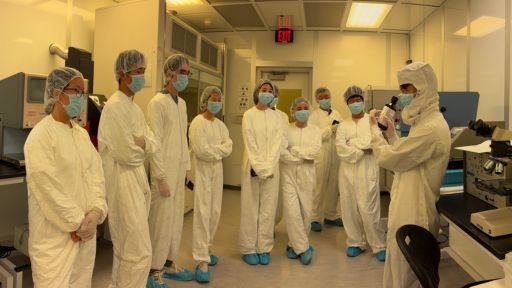
The university-based environment gave students exposure to spaces where engineering research, fabrication, and experimentation take place. Program activities included visits or introductions to maker spaces, microfluidics laboratories, materials science facilities, chemical engineering laboratories, and cleanroom-related environments.
For many students, touring these spaces can make engineering education feel more concrete. A general interest in science may become a clearer academic goal after a student sees how university researchers design devices, analyze materials, fabricate components, or conduct laboratory testing.
Maker spaces are particularly relevant to project-based learning because they bring digital ideas into the physical world. Students can observe tools used for printing, cutting, prototyping, and assembly. They begin to understand that engineering design is closely connected to manufacturing constraints and material behavior.
Laboratory visits also help students recognize the importance of safety and procedure. Research spaces require organization, training, protective equipment, careful handling of materials, and respect for shared tools. These expectations reinforce the idea that technical independence must be supported by responsible behavior.
Cleanroom exposure can be especially memorable because cleanrooms are designed to control environmental contamination. Students may gain a better understanding of why small particles, improper handling, or unclean surfaces can affect sensitive fabrication processes.
Through these experiences, students were not merely learning about engineering careers in theory. They were observing the spaces, tools, and professional habits associated with university-level STEM work.
Designing the Chip Holder, Housing, and Channel Structure
Once students had developed foundational CAD and microfluidics knowledge, they began applying those skills to the physical structure of the device.
The chip holder had to do more than simply contain the chip. It needed to provide stability, maintain alignment, allow access to important areas, and work with the housing and electronic components. A poorly designed holder could make assembly difficult or affect the consistency of testing.
The housing also required system-level thinking. Students needed to consider where components would be placed, how wiring would be organized, and whether the final structure would be practical to assemble and use.
Channel masks were connected to the microfluidic design. The shape and dimensions of the channels could influence how the liquid moved through the device. Students therefore had to connect their digital design decisions with the scientific behavior of the system.
This stage showed students why engineering is rarely divided into completely separate tasks. The design of one component can influence the performance of another. A change to the housing may affect wiring. A change to the chip holder may affect alignment. A change to the channel structure may influence fluid movement.
Students needed to think beyond individual pieces and consider the complete device as an integrated system.
Fabricating the PDMS Microfluidic Device
During the fabrication stage, students worked with PDMS, or polydimethylsiloxane. PDMS is a flexible polymer commonly used in microfluidic research and prototyping because it can be formed into structures containing small channels.
Working with PDMS helped students understand how a digital design becomes a physical object. The process required accuracy, attention to detail, and patience. Dimensions and surface quality could influence whether the final device functioned as intended.
Fabrication is often the moment when design assumptions are tested in a more concrete way. A model that appeared correct on a computer screen must now fit with other components, maintain its shape, and support the movement of a sample.
Students could observe whether their earlier measurements were accurate and whether the physical parts aligned properly. When a component did not fit or perform as expected, they needed to determine whether the issue came from the design, the material, the fabrication process, or the assembly.
This transition from digital planning to physical production is one of the most important experiences in a summer STEM camp for high school students. It teaches students that engineering ideas must eventually respond to real-world limitations.
Assembling the Prototype
Prototype assembly brought together the work completed during the earlier phases of the program. Students combined fabricated components, electronic elements, wiring, the chip holder, housing, and microfluidic structures into a more complete system.
Assembly required coordination among team members. Students needed to follow an appropriate sequence, protect delicate components, confirm connections, and evaluate whether the structure was stable.
This stage could reveal problems that were not obvious during design or fabrication. Two components might interfere with one another. A wire might be difficult to access. A holder might need adjustment. The physical device might require more support than the digital model suggested.
Rather than treating these discoveries as failures, students could use them as evidence. Each issue provided information about what needed to be revised or tested.
Prototype development teaches students that engineering is a process of progressive improvement. The first assembled version is rarely the final version. Its purpose is to make the design testable so that strengths and weaknesses can be identified.
Calibrating the Lab-on-a-Chip System
A device is not complete simply because it has been assembled. It must also produce results that can be interpreted.
Calibration was therefore a major part of the Lab-on-a-Chip project. Students used known fluorescein concentrations to evaluate how the system responded under controlled conditions.
A calibration process creates a relationship between a known input and a measured response. Once that relationship is understood, the system may be used to estimate the concentration of an unknown sample.
This stage required students to think critically about data quality. They needed to consider whether the results were consistent, whether the measurements followed an understandable pattern, and whether unexpected values indicated a problem with the sample, device, electronics, or testing procedure.
Calibration also introduced students to the difference between obtaining a result and obtaining a trustworthy result. A device can produce numbers without necessarily producing meaningful information. Engineers must evaluate repeatability, consistency, possible error, and the limitations of the system.
Through calibration, students learned that measurement is not passive. It requires preparation, reference values, careful procedures, and thoughtful interpretation.
Testing an Unknown Solution
After calibration, students moved toward testing an unknown fluorescein solution. This phase gave the project a clear objective because the complete system had to be used to answer a question.
Students were no longer practicing isolated skills. They were combining chemical preparation, device fabrication, electronics, calibration data, and analytical reasoning to estimate an unknown concentration.
This experience reflected the complete engineering journey. Students began with background knowledge and foundational skills. They created designs, fabricated parts, assembled a prototype, calibrated the system, tested a sample, and interpreted the outcome.
Unknown-solution testing also required students to tolerate uncertainty. The answer was not provided in advance, and the system might not behave perfectly. Students had to evaluate the evidence available to them and explain the reasoning behind their conclusion.
This is an important part of scientific thinking. Real research rarely presents students with a perfectly organized problem and a guaranteed correct outcome. Researchers must work with limitations, incomplete information, measurement variation, and unexpected results.
Learning From Problems and Design Revisions
One of the most valuable outcomes of the program was the opportunity to experience engineering as an iterative process.
Students may enter a STEM camp for high school with the assumption that successful engineers always know exactly what to do. In reality, engineering frequently involves uncertainty, experimentation, and revision.
A device may not work during the first test. A component may need to be redesigned. A measurement may appear inconsistent. A connection may need to be repaired. A sample may need to be prepared again.
These moments can be frustrating, but they also provide some of the strongest learning opportunities. Students must slow down, observe carefully, ask precise questions, and avoid changing several variables at once.
They also learn emotional resilience. Technical work requires students to separate a disappointing result from their sense of personal ability. A failed test does not mean that the student is incapable. It means that the system has provided new information.
By learning to respond constructively to problems, students develop habits that can support future coursework, research, competitions, internships, and college-level engineering projects.
Professional Development Beyond Technical Skills
The program also included activities connected to project management, résumé development, college pathways, engineering research, presentation skills, and future careers.
These sessions were important because technical ability alone is not enough for success in STEM. Engineers and researchers must manage deadlines, document their work, communicate with team members, present conclusions, and explain why their project matters.
Project management instruction can help students understand how a large assignment should be divided into smaller stages. They learn to identify priorities, assign responsibilities, monitor progress, and respond when the schedule changes.
Résumé development introduces students to the importance of describing experiences clearly. Instead of writing only that they attended a camp, students can learn to explain the technical skills they practiced, the project they completed, the tools they used, and the outcome they helped produce.
College-related discussions may also help students connect the program to possible academic pathways. A student who enjoys microfluidics may begin exploring biomedical engineering or chemical engineering. A student who prefers electronics may become interested in electrical engineering or embedded systems. A student who enjoys fabrication and materials may consider mechanical engineering or materials science.
The purpose of this exploration is not to pressure students into selecting a major immediately. It is to help them develop more informed questions about their future.
Developing Scientific Communication Skills
During the final stage of the program, students prepared project posters and practiced explaining their work.
A technical poster must present a complex project in a format that is clear, organized, and visually understandable. Students need to identify the most important information, arrange it logically, and avoid overwhelming the audience with unnecessary detail.
The poster may explain the problem, background science, design process, fabrication methods, electronic system, calibration procedure, test results, challenges, and conclusions. Creating this summary requires students to reflect on the entire project rather than focusing only on the final device.
Presentation practice adds another layer of learning. Students must speak clearly, use technical terms appropriately, respond to questions, and explain their reasoning to people who may not have participated in the project.
Scientific communication is especially important because even a strong technical result has limited impact if it cannot be understood. Engineers must communicate with researchers, clients, investors, policymakers, patients, and members of the public.
By presenting their work, students developed confidence not only in what they built but also in their ability to explain how and why they built it.
What Students Can Gain From a High School STEM Camp
The technical knowledge gained during a high school engineering summer camp can be significant. Students may become more familiar with CAD modeling, Arduino electronics, soldering, microfluidics, PDMS fabrication, chemical solution preparation, device calibration, and data interpretation.
However, the broader learning outcomes may be equally important.
Students practice working with others, managing responsibilities, following detailed procedures, responding to technical setbacks, and completing a multi-stage project. They develop a stronger understanding of how different STEM fields connect and why precision matters.
They may also gain greater confidence in unfamiliar environments. A student who initially feels uncertain around laboratory tools, technical software, or electronic components may become more comfortable through guided practice.
The experience can also help students recognize which types of work they enjoy. Some may prefer digital design, while others are more interested in chemistry, fabrication, electronics, research, or communication. Understanding these preferences can support future course selection and extracurricular planning.
How Summer STEM Experiences Relate to College Applications
Families often ask whether attending a summer STEM program will strengthen a college application.
A summer program can support a student’s development, but participation alone does not guarantee admission or automatically make an application distinctive. Colleges generally evaluate how students use their opportunities, what they learn, and whether their interests develop over time.
The experience becomes more meaningful when a student builds upon it. After completing a 2026 summer program, a student might continue learning CAD, develop an independent Arduino project, join a robotics or engineering club, enter a science competition, explore research literature, or create a new prototype.
Students may also reflect on how the program changed their understanding of engineering. A thoughtful explanation of a challenge, design revision, or unexpected result can reveal more about a student than a simple statement that they attended a prestigious program.
The strongest outcome is therefore not the name of the camp. It is the knowledge, curiosity, persistence, and continued action that the experience inspires.
Final Thoughts on the 2026 Summer Lab-on-a-Chip Experience
The 2026 summer Lab-on-a-Chip experience showed how a well-designed STEM program can connect classroom concepts to practical engineering work.
Students moved through a complete project cycle that included orientation, team development, CAD modeling, microfluidics, chemistry, Arduino electronics, soldering, component design, PDMS fabrication, assembly, calibration, unknown-solution testing, poster preparation, and final presentation.
Through this process, engineering became more than a future college major or career possibility. It became something students could actively design, build, test, revise, and explain.
The technical topic was important, but the method of learning may have been even more valuable. Students learned that a complex project develops through many connected stages. They saw how an inaccurate measurement could affect calibration, how a design decision could influence fabrication, and how a small electronic connection could determine whether the entire system functioned correctly.
They also learned that mistakes and unexpected results are part of technical work. Engineering does not always follow a straight path from idea to success. It requires patience, evidence, collaboration, and the willingness to improve a design.
For students interested in engineering, biotechnology, chemistry, electronics, or applied research, a project-based summer experience can provide a meaningful introduction to future academic pathways. It can help them identify their interests, strengthen their technical confidence, and understand the habits required for university-level STEM learning.
The most lasting result of a 2026 summer STEM camp is not simply the completed device or final poster. It is the mindset students develop through the process: the confidence to ask questions, the discipline to test ideas carefully, the resilience to revise unsuccessful designs, and the ability to communicate what they have learned.
Those habits can continue to support students long after the summer program has ended.
By submitting this form, you are consenting to receive marketing emails from: IvyMax Inc, 41111 Mission Blvd., Suite 200, Fremont, CA, 94539, https://ivymax.com/. You can revoke your consent to receive emails at any time by using the SafeUnsubscribe® link, found at the bottom of every email. Emails are serviced by Constant Contact
Interested in our program?
Complete the form below and we’ll quickly respond with detailed information, and answers to all your questions!