
The Ultimate Guide to the Top 10 STEM Camp Programs for High School Students in 2026
Table of Contents
Summer STEM Camp
In recent years, STEM education has evolved dramatically. Universities no longer evaluate applicants solely based on grades or standardized test scores. Instead, admissions committees increasingly look for students who demonstrate genuine intellectual curiosity, initiative, and the ability to apply knowledge to real-world challenges. Participating in a rigorous STEM camp allows students to explore advanced topics beyond the typical high school curriculum while also building a strong academic profile for college applications.
This guide examines ten of the most respected STEM camp programs for high school students in 2026, explaining what makes each program distinctive and how students can choose the opportunity that best fits their academic interests.
The Changing Role of the STEM Camp in 2026
The modern STEM camp is very different from what it was even a decade ago. Earlier programs often focused primarily on classroom-style instruction, where students attended lectures and completed small academic projects. While these programs were valuable, they did not always reflect the fast-moving technological landscape that defines today’s scientific world.
In 2026, the most effective summer STEM camp programs emphasize applied learning and interdisciplinary problem solving. The rapid development of artificial intelligence, robotics, biotechnology, and data science has transformed the types of skills students need in order to succeed in STEM careers. As a result, many leading STEM camps now emphasize projects that integrate multiple disciplines at once.
For example, a student interested in autonomous vehicles might need to understand computer vision, sensor integration, machine learning algorithms, mechanical design, and embedded programming. A biomedical researcher might combine molecular biology with computational analysis and engineering design. These cross-disciplinary experiences are increasingly common in top STEM camp environments, where students collaborate to build real systems and conduct authentic research.
Another important shift involves the role of mentorship. Rather than simply learning from instructors, students at a modern summer STEM camp often work directly with graduate students, faculty members, and professional researchers. This mentorship provides valuable insight into what scientific careers actually look like and allows students to experience the intellectual culture of research universities.
The result is that a well-designed STEM camp can now provide experiences that closely resemble the first year of university-level research. Students learn how to ask scientific questions, design experiments, troubleshoot technical challenges, and present their findings. These experiences not only build academic skills but also help students discover which areas of science or engineering truly excite them.
What Makes a STEM Camp Truly Outstanding
Not all STEM programs provide the same level of academic depth or educational value. While many summer STEM camp programs advertise hands-on learning and exciting projects, the strongest camps share several defining characteristics that distinguish them from ordinary summer programs.
First, the most respected STEM camp programs emphasize authentic research or engineering design. Rather than simply following step-by-step instructions, students are encouraged to develop original ideas, explore complex problems, and think creatively. This process teaches students how real scientists and engineers approach challenges.
Second, a strong summer STEM camp connects students with experienced mentors. Whether the mentors are university professors, graduate researchers, or industry professionals, their guidance helps students navigate advanced topics and gain insight into career paths in science and engineering.
Third, the best STEM camp experiences take place in environments where students can access real laboratories, professional equipment, and advanced computing tools. Working in these environments allows students to move beyond theoretical learning and experiment with technologies that are shaping modern research.
Finally, top STEM camps attract highly motivated students from around the world. When students collaborate with peers who share similar academic passions, they are exposed to new ideas and perspectives that encourage intellectual growth. This collaborative atmosphere is one of the most valuable aspects of attending a competitive STEM camp.
Top 10 STEM Camp Programs for High School Students in 2026
Research Science Institute (RSI)
The Research Science Institute, commonly known as RSI, is widely regarded as one of the most prestigious STEM camp programs available to high school students. Hosted at the Massachusetts Institute of Technology, RSI brings together approximately eighty exceptional students from around the world each summer.
Unlike many traditional summer STEM camp programs, RSI is structured entirely around original research. Students begin the program by attending intensive lectures from MIT faculty members that introduce them to advanced scientific concepts and current research challenges. After this initial academic phase, each participant is paired with a mentor who guides them through a research project that spans the remainder of the program.
The research topics explored at RSI vary widely, covering fields such as physics, computer science, engineering, mathematics, biology, and environmental science. Students are expected to conduct literature reviews, design experiments, analyze data, and ultimately present their findings in a professional research paper and conference-style presentation.
Because RSI emphasizes independent research and critical thinking, it is often viewed as the gold standard STEM camp for students who hope to pursue careers in scientific research or attend highly selective universities.
Summer Science Program (SSP)
The Summer Science Program is another long-established STEM camp known for its rigorous academic environment. SSP focuses on immersive scientific research and collaborative problem solving, allowing students to experience what it feels like to work as part of a real research team.
Students participating in this summer STEM camp choose among several specialized tracks, including astrophysics, biochemistry, and genomics. Each track centers on a complex research question that students must investigate throughout the program.
For example, students in the astrophysics track work with real astronomical data to determine the orbit of a near-Earth asteroid. This project requires students to apply concepts from physics, mathematics, and computational modeling while collaborating closely with teammates.
The program’s emphasis on teamwork and problem solving helps students develop resilience and persistence, qualities that are essential for success in scientific research. For many students, SSP represents one of the most intellectually demanding STEM camp experiences available during high school.
Stanford Institutes of Medicine Summer Research (SIMR)
Students interested in biomedical science often seek opportunities to explore research in medical laboratories. The Stanford Institutes of Medicine Summer Research program provides exactly that type of experience, making it one of the most respected STEM camp opportunities for students considering careers in medicine or bioengineering.
Participants in this summer STEM camp work directly in Stanford research labs alongside faculty members and graduate students. The program covers a wide range of medical research fields, including immunology, cancer biology, neuroscience, stem cell research, and bioengineering.
Throughout the program, students contribute to ongoing research projects while also attending lectures that introduce them to emerging developments in biomedical science. By the end of the program, participants have gained a deeper understanding of how laboratory discoveries translate into medical treatments and clinical innovations.
For students who hope to pursue pre-med or biomedical engineering pathways, SIMR offers a rare opportunity to experience the world of professional scientific research while still in high school.
UCI Autonomous Driving Summer Camp
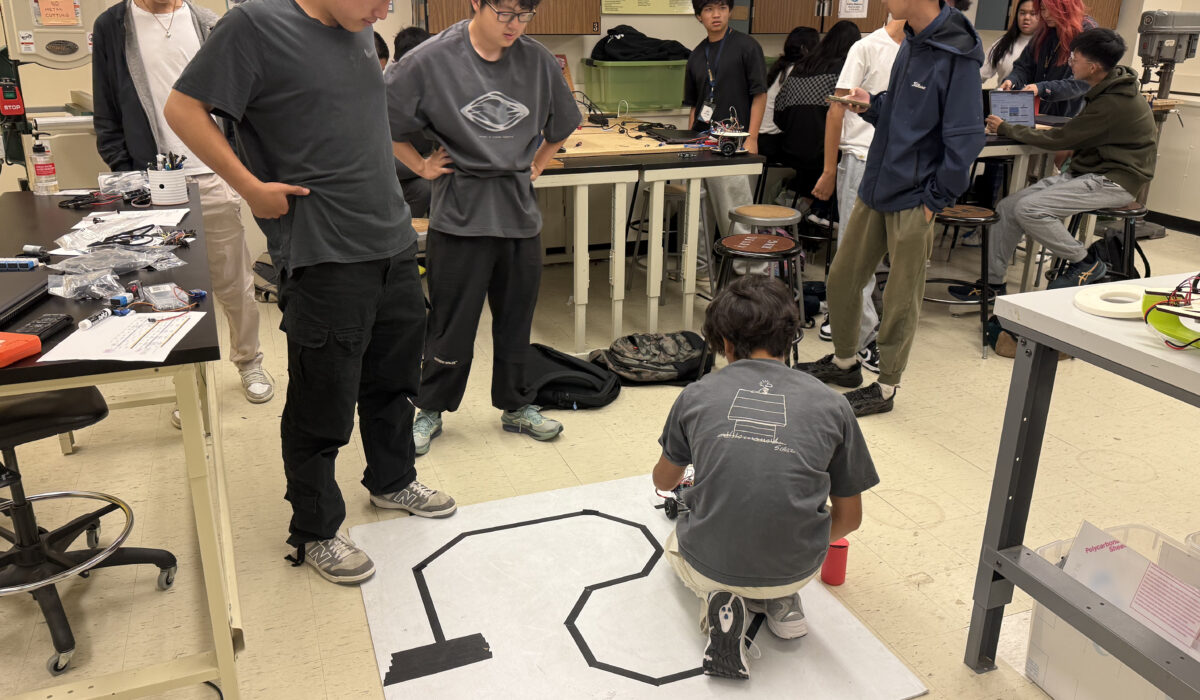
Among the newer but rapidly growing STEM camp programs, the UCI Autonomous Driving Summer Camp stands out as a powerful example of applied engineering education. Hosted through collaboration with the UCI Samueli School of Engineering, this summer STEM camp focuses on the technologies that power modern autonomous vehicles.
Participants in the program learn how intelligent machines perceive and navigate the world. Rather than studying theory alone, students design and build autonomous rover systems that use sensors and algorithms to move through real environments.
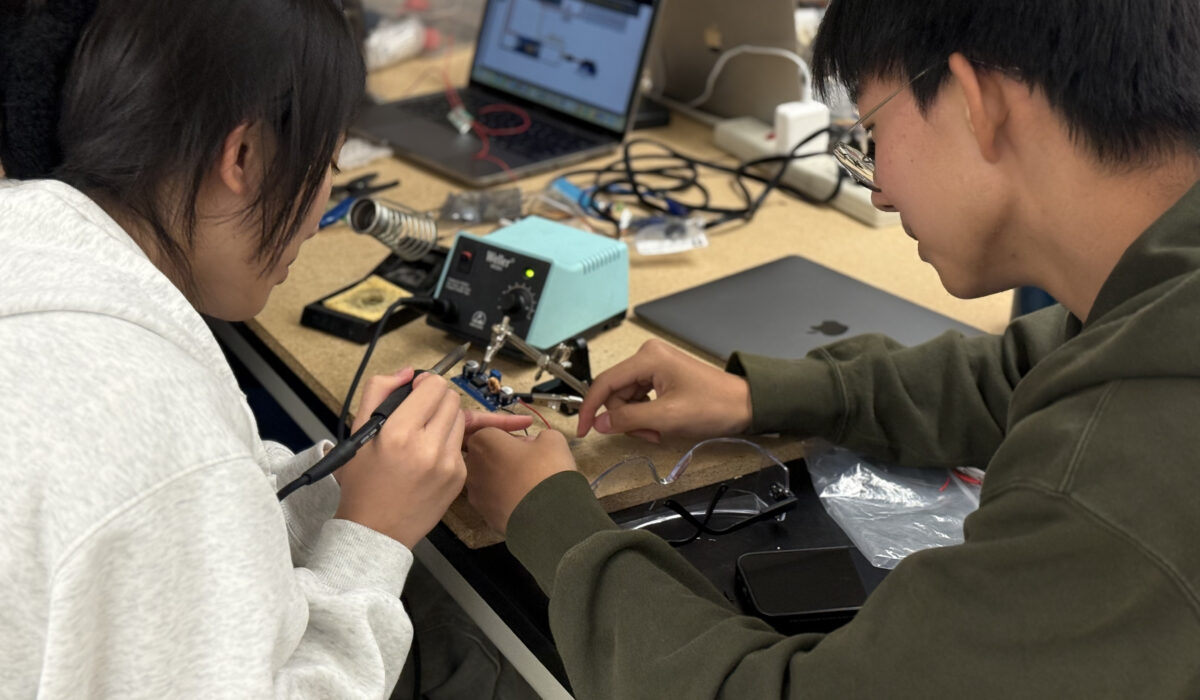
During the program, students explore engineering concepts such as mechanical design, embedded electronics, and artificial intelligence. They use 3D modeling software to design rover components and assemble physical systems that integrate sensors, motors, and microcontrollers. Students then write code that allows their rovers to interpret sensor data and make decisions in real time.
This combination of hardware engineering and AI programming gives students a comprehensive introduction to autonomous systems. By the end of the summer STEM camp, participants have built functioning robotic vehicles capable of navigating obstacles and responding to environmental conditions.
Programs like this illustrate how modern STEM camp education increasingly focuses on interdisciplinary technologies that connect computer science, robotics, and engineering design.
COSMOS (California State Summer School for Mathematics and Science)
The California State Summer School for Mathematics and Science, commonly known as COSMOS, is a highly selective STEM camp for students in California. Hosted across several University of California campuses, COSMOS offers specialized academic clusters that explore advanced topics in science and engineering.
Each cluster functions as a focused learning community where students investigate a specific subject area in depth. Topics may include robotics, sustainable energy systems, biomedical engineering, computational biology, or environmental science.
Students participating in this summer STEM camp attend lectures, conduct laboratory experiments, and collaborate on projects that apply scientific theory to real-world challenges. Because the program takes place on university campuses, students also gain early exposure to college life and research facilities.
For students considering applying to universities within the University of California system, COSMOS offers an excellent opportunity to experience the academic environment and demonstrate interest in STEM disciplines.
MIT PRIMES
MIT PRIMES is a research-based STEM camp program designed for students with exceptional talent in mathematics and computer science. Although the program extends throughout the academic year, its summer component involves intensive research guided by mentors from MIT.
Students participating in PRIMES tackle challenging mathematical or computational problems that often require months of investigation. Rather than following a fixed curriculum, participants pursue original research that may lead to academic publications or high-level competition submissions.
The program emphasizes deep conceptual understanding and independent thinking. Students learn how to explore mathematical structures, develop proofs, and design algorithms that address complex theoretical questions.
For students who enjoy pure mathematics or theoretical computer science, PRIMES represents one of the most intellectually demanding STEM camp opportunities available.
Carnegie Mellon Pre-College AI and Robotics
Carnegie Mellon University has long been recognized as a global leader in artificial intelligence and robotics research. Its pre-college AI and Robotics program offers a summer STEM camp that introduces students to these rapidly evolving technologies.
Participants learn how intelligent systems interpret images, analyze data, and interact with the physical world. The program covers topics such as machine learning, computer vision, and robotic control systems.
Students complete projects that involve programming robots, designing algorithms, and experimenting with AI models that can recognize patterns or respond to environmental inputs. Through these activities, students gain insight into how modern robotics integrates software engineering with physical machines.
For students interested in careers related to AI development, robotics engineering, or computer science research, this STEM camp provides a valuable introduction to the field.
Jackson Laboratory Summer Student Program
The Jackson Laboratory Summer Student Program is widely regarded as one of the premier STEM camp experiences in genetics and biomedical research. Located in Bar Harbor, Maine, the program allows students to work alongside professional scientists in a leading genetics research institution.
Participants conduct independent research projects that explore topics such as genetic diseases, molecular biology, and genomic analysis. The program emphasizes scientific inquiry, encouraging students to design experiments, analyze data, and interpret biological processes.
Students also attend seminars and workshops that introduce them to current developments in genetics and personalized medicine. These experiences provide valuable insight into how genetic research contributes to medical breakthroughs and disease prevention.
For students interested in biotechnology or medical research, this summer STEM camp offers an immersive introduction to one of the most rapidly advancing fields in science.
PROMYS (Program in Mathematics for Young Scientists)
PROMYS is a mathematics-focused STEM camp that challenges students to explore the deeper beauty of mathematical reasoning. Hosted at Boston University, the program is known for its emphasis on number theory and mathematical discovery.
Rather than relying on memorization, students learn to uncover mathematical truths through logical reasoning and proof construction. Daily problem sets encourage students to experiment with ideas, identify patterns, and develop original solutions.
The intellectual atmosphere of PROMYS fosters a community of students who share a passion for mathematics. Many participants describe the experience as transformative because it changes the way they think about mathematical problems and scientific exploration.
For students who enjoy theoretical thinking and abstract problem solving, PROMYS offers one of the most rewarding STEM camp experiences available.
NIH Summer Internship Program
The National Institutes of Health Summer Internship Program provides high school students with the opportunity to work within one of the world’s most important biomedical research institutions. This STEM camp-style internship introduces students to the intersection of science, public health, and government research.
Students work in NIH laboratories where they assist with research projects related to medicine, biology, and health sciences. Under the guidance of professional researchers, interns gain experience with laboratory techniques, scientific analysis, and research methodology.
The program also exposes students to the broader impact of biomedical research on society. Participants learn how scientific discoveries influence medical treatments, healthcare policy, and public health initiatives.
For students interested in medical science or public health research, this program represents a unique summer STEM camp opportunity to experience research at the national level.
Why Applied Engineering and Autonomous Systems Are Defining the Future of STEM Camp Learning
The technologies shaping the next decade of innovation are increasingly based on systems that combine artificial intelligence with physical machines. Autonomous vehicles, robotics, smart manufacturing, and intelligent infrastructure all rely on complex systems that integrate software and hardware.
Because of this shift, many modern STEM camp programs emphasize hands-on engineering projects where students build systems that sense, analyze, and respond to real environments. These projects teach students how theoretical knowledge translates into practical technology.
When students design a robotic rover or autonomous device, they must consider mechanical structure, electronic circuits, sensor calibration, and algorithmic decision-making simultaneously. This interdisciplinary approach reflects the realities of modern engineering and prepares students for university-level research.
Participating in a summer STEM camp that emphasizes applied engineering allows students to develop a “full-stack” understanding of technology. They learn not only how to write code but also how software interacts with hardware and how systems behave in real-world environments.
How to Choose the Right STEM Camp for Your Interests
With so many excellent programs available, choosing the right STEM camp depends largely on a student’s academic interests and long-term goals. Some students thrive in research-focused environments where they can explore theoretical questions, while others prefer applied engineering projects that involve building physical systems.
Students interested in medicine or biology may benefit most from programs that emphasize laboratory research and biomedical science. Those fascinated by artificial intelligence or robotics might prefer camps that involve programming and engineering design.
Another important factor is the level of independence a student is ready for. Some summer STEM camp programs provide structured coursework and guided projects, while others expect students to conduct independent research with minimal supervision.
Ultimately, the best STEM camp is the one that allows students to explore their curiosity while developing skills that align with their academic passions.
Why a STEM Camp Can Shape a Student’s Future
Attending a high-quality STEM camp can be one of the most influential academic experiences a high school student has before college. These programs expose students to advanced scientific ideas, connect them with mentors, and allow them to participate in projects that mirror real research and engineering work.
A well-chosen summer STEM camp does more than strengthen a college application. It helps students discover what fields excite them, develop confidence in their abilities, and build relationships with peers who share similar intellectual passions.
As technology continues to evolve, the demand for innovative thinkers and skilled engineers will only grow. Programs that combine rigorous academic learning with hands-on exploration are preparing the next generation of scientists, engineers, and innovators.
For students eager to explore the frontiers of science and technology, the summer of 2026 offers a remarkable opportunity. Choosing the right STEM camp may be the first step toward a lifelong journey of discovery and innovation.
By submitting this form, you are consenting to receive marketing emails from: IvyMax, 41111 Mission Blvd., Suite 200, Fremont, CA, 94539, https://ivymax.com/. You can revoke your consent to receive emails at any time by using the SafeUnsubscribe® link, found at the bottom of every email. Emails are serviced by Constant Contact
Interested in our program?
Complete the form below and we’ll quickly respond with detailed information, and answers to all your questions!