
IvyMax Students Win First Place at the 2026 OC Policy Pitch Olympiad
Table of Contents
OC Policy Pitch Olympiad
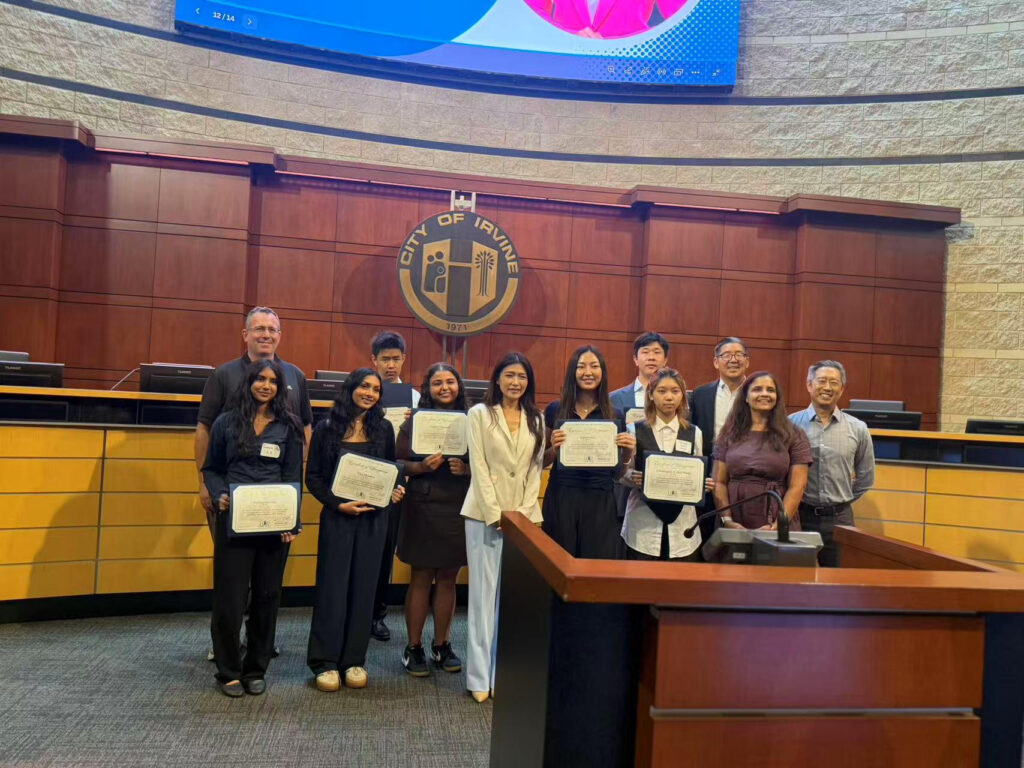
Three students from the IvyMax Irvine Center achieved an exciting milestone on September 19, 2026, earning First Place at the OC Policy Pitch Olympiad as one collaborative team.
Grade 11 students Terry Hsu and Brain Mou, together with Grade 12 student Celia Wang, competed in the Orange County event and were named the First Place Team Champion.
Their accomplishment is worth celebrating not only because of the final result, but also because of the abilities a policy pitch competition asks students to bring together. Developing and presenting a policy idea requires more than speaking confidently in front of an audience. Students must think critically about a problem, organize a persuasive argument, communicate complex ideas clearly, work effectively as a team, and present their thinking under real-world pressure.
For high school students, experiences like these create an opportunity to move beyond learning concepts in isolation. Research, reasoning, communication, collaboration, and leadership become skills students have to apply in a meaningful setting.
For Terry, Brain, and Celia, that opportunity ended with a first-place finish—and an achievement the entire IvyMax community is proud to celebrate.
Celebrating Terry Hsu, Brain Mou, and Celia Wang
The winning IvyMax team brought together students from two high school grade levels. Terry Hsu, a Grade 11 student and Franklin Academy student, competed alongside Brain Mou, also in Grade 11, and Celia Wang, a Grade 12 student. All three participated as one team representing the IvyMax Irvine Center.
That team structure is an important part of the achievement. Although individual communication and analytical abilities are essential in a competition, a team result depends on students being able to combine their strengths around one shared goal. Members need to understand the larger argument, recognize how their ideas connect, listen to one another, and maintain a consistent message throughout the presentation.
Their First Place result therefore represents more than three strong individual performances placed side by side. It reflects a collaborative outcome in which different ideas and skills had to come together effectively. That ability to work toward a common result is valuable not only in competitions, but also in research, college projects, leadership settings, and future professional environments.
What Is the OC Policy Pitch Olympiad?
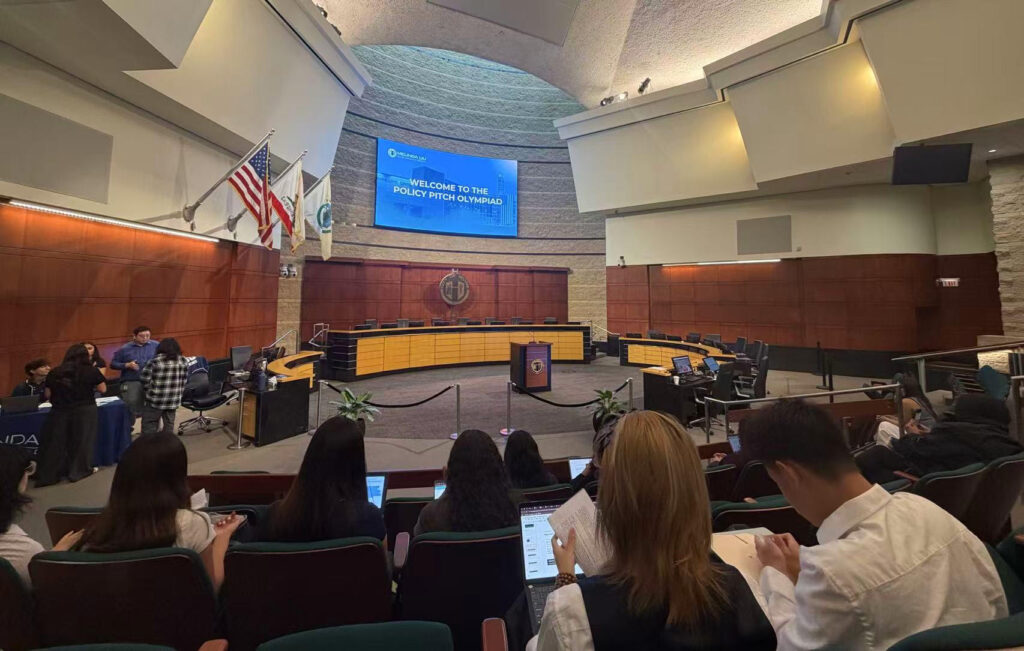
The OC Policy Pitch Olympiad is a student competition centered on policy ideas, public speaking, presentation, and debate. The September 19, 2026 event took place in Irvine and gave students an opportunity to develop ideas and make a persuasive case for them in a competitive environment.
A policy pitch differs from a standard classroom presentation because students are not simply explaining information. They need to identify an issue, develop a proposed response, organize the reasoning behind that proposal, and communicate the idea clearly enough for an audience to follow. In many cases, students must also consider different perspectives surrounding a problem, including feasibility, competing priorities, potential concerns, and the people who could be affected by the proposed solution.
The educational value comes from learning to examine those complexities rather than simply stating an opinion. A strong policy pitch requires students to move from “This is what I think” toward “This is the problem, this is the reasoning behind our proposal, and this is why the idea deserves consideration.” That combination of analysis and communication makes policy competitions especially valuable for students interested in public policy, economics, law, business, debate, communication, social sciences, or leadership.
From a Policy Idea to a Winning Pitch
A strong pitch begins long before a student stands in front of an audience. Students first need to understand the problem they want to address. Broad topics often have to be narrowed into specific questions that can realistically be researched, discussed, and presented within a limited amount of time.
The next step is developing a proposal. Students must move beyond identifying a problem and decide what they believe should be done about it. That naturally leads to harder questions. Why might the proposal work? What evidence or reasoning supports it? Who would be affected? What concerns could another person reasonably raise? Are there trade-offs that need to be acknowledged?
These questions push students beyond surface-level thinking. They must examine assumptions, distinguish stronger arguments from weaker ones, and decide which information actually matters to the audience. Finally, they need to transform that thinking into a presentation that is concise enough to follow but detailed enough to be persuasive.
This process teaches an important academic skill: sophisticated thinking and clear communication are closely connected. Knowing a subject deeply is valuable, but being able to explain that knowledge in a way another person can understand is a different ability. A policy pitch asks students to do both.
Why Public Speaking Matters in a High School Student Competition
Public speaking is often described simply as a confidence-building activity, but effective speaking requires much more than confidence. Students need organization, clarity, awareness of their audience, and a strong understanding of the material they are presenting.
A student who has researched a topic extensively still needs to decide what the audience should remember. The presentation needs a logical structure, smooth transitions, appropriate pacing, and language that makes complicated ideas understandable. Students also need to know the topic well enough to communicate naturally rather than depending entirely on memorized sentences.
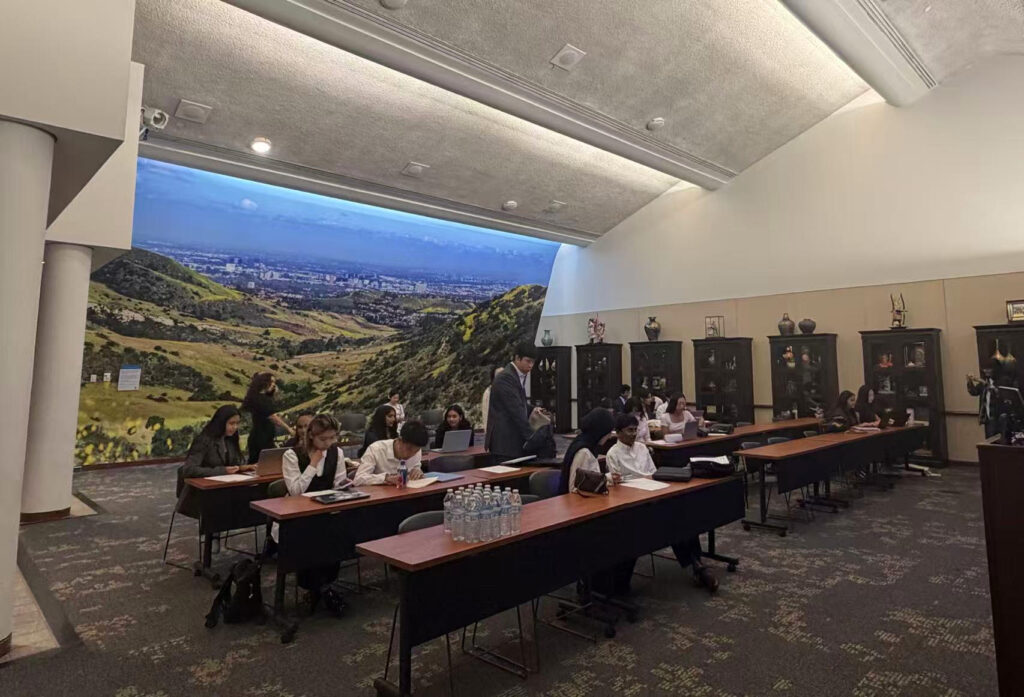
A high school student competition adds another layer of difficulty because students are performing in an environment where their work is being evaluated. The setting may include unfamiliar judges, other competing teams, time restrictions, and the pressure of presenting in a more formal venue than a regular classroom. Students must learn how to manage that pressure while keeping their communication clear and focused.
These skills can remain valuable long after the competition ends. The same ability to explain an idea clearly can help students during research presentations, college interviews, internships, classroom discussions, leadership activities, entrepreneurship competitions, and eventually professional settings.
Teamwork Behind a First-Place Result
Terry, Brain, and Celia’s achievement was fundamentally a team result. Working in a group creates challenges that students do not encounter when preparing an individual presentation. Three students may initially have different opinions about which ideas matter most, how an argument should be structured, which evidence should be emphasized, or how speaking responsibilities should be divided.
Successful collaboration requires students to listen rather than simply defend their own preferred approach. They need to recognize when an idea should be strengthened, when another teammate’s suggestion may work better, and how each part of the presentation contributes to the whole. The final pitch should feel unified rather than like three unrelated speeches placed together.
That kind of coordination also depends on trust. Every member needs to understand the shared argument and be prepared to support the team rather than focusing only on an individual speaking role. One student’s point should prepare the audience for the next, and the conclusion should feel like the natural result of the argument the group has developed together.
The First Place finish at the OC Policy Pitch Olympiad therefore reflects collaborative problem-solving as much as individual ability. For high school students, learning how to align different ideas around one shared objective is a skill that becomes increasingly important in college and beyond.
5 Skills Students Develop Through Policy Pitch Competitions
1. Critical Thinking
Policy questions rarely have completely simple answers. Students may begin with an idea that appears convincing and then discover complications once they investigate the issue more deeply. Critical thinking requires them to ask what assumptions they are making, whether the available evidence supports the proposal, what another perspective might reveal, and what could make the solution more difficult to implement.
This process teaches students not to become attached to the first answer they develop. Instead, they learn to test an idea, revise it, and strengthen it through questioning. That type of intellectual flexibility can support learning across many academic subjects.
2. Research and Evidence Evaluation
A persuasive position becomes stronger when students can distinguish between an unsupported claim and one grounded in relevant evidence. Research therefore involves more than simply finding large amounts of information. Students need to decide what information is useful, whether it genuinely supports the argument, and how much importance it deserves.
They also learn that adding more facts does not automatically make a presentation more persuasive. Effective research requires selection. Students must choose evidence that helps an audience understand the issue without overwhelming the presentation with details that distract from the central argument.
3. Persuasive Communication
Persuasion is not simply telling an audience what to believe. Strong persuasive communication begins by helping the audience understand the problem, the reasoning behind a proposed solution, and why that solution deserves consideration.
Students therefore need to think about the questions an audience may have. Why does this issue matter? Why should this proposal be considered instead of another approach? What concern might someone reasonably raise? Anticipating those questions forces students to think beyond their own perspective and communicate with the listener in mind.
4. Public Speaking
Standing in front of an audience transforms a written idea into a live communication challenge. Students must manage pacing, transitions, emphasis, and clarity while maintaining enough composure to present their thinking effectively.
A competitive environment can make those demands more intense. Students often discover that confidence does not necessarily mean feeling no nervousness. It can mean being prepared enough to communicate effectively even when pressure is present.
5. Collaboration and Leadership
Team competitions also teach students that leadership does not always mean being the person who talks the most or makes every decision. Leadership can involve offering a strong idea, helping a teammate strengthen an argument, listening carefully, accepting feedback, or changing direction because another approach serves the team better.
Those experiences help students understand leadership as a collaborative skill rather than simply an individual title. That perspective can become increasingly important as students move into more complex group projects, research teams, college organizations, and professional environments.
Why This Student Achievement Matters Beyond the Award
Winning First Place is an exciting result and deserves recognition, but one of the most valuable parts of a student achievement is understanding what students had to do in order to reach that result. A trophy captures one moment, while the abilities developed through preparation and competition can influence students much longer.
Terry, Brain, and Celia had the opportunity to participate in an environment that required them to communicate ideas, collaborate with teammates, and perform under competitive conditions. Those experiences can change how students approach future challenges. A student who becomes more comfortable presenting may be more willing to contribute during a college seminar. A student who learns to evaluate evidence may approach future research projects differently. A student who learns how to work with teammates who think differently may become more effective in future leadership roles.
This is one reason academic and leadership competitions can be so valuable for high school students. They create an environment in which knowledge and interpersonal skills come together. Students are not simply learning the definition of critical thinking; they need to think critically. They are not simply discussing communication; they need to communicate. They are not simply hearing about teamwork; they need to collaborate when the outcome matters.
Learning Beyond the Classroom at IvyMax
At IvyMax, student development extends beyond grades and standardized test scores. High school is an important period for students to begin identifying interests, testing their abilities, taking initiative, and exploring opportunities that allow them to apply academic skills in unfamiliar settings.
For one student, that opportunity may involve research. For another, it may be engineering, entrepreneurship, debate, leadership, writing, community engagement, or academic competition. Students do not need to follow one identical pathway for their experiences to be meaningful.
The achievement of Terry, Brain, and Celia is a strong example of students stepping into a competitive environment and using reasoning, communication, and teamwork in a practical setting. Their First Place finish belongs to them, and IvyMax is proud to celebrate what they accomplished as members of the Irvine Center community.
Recognizing achievements in this way is important because the goal is not only to celebrate the final ranking. It is also to encourage students to continue pursuing opportunities that challenge them to develop their interests and apply what they are learning beyond a traditional classroom setting.
Why Experiences Like This Matter for High School Students
High school students often hear that they should become involved in activities, but involvement is most valuable when an experience gives them a real opportunity to learn, contribute, or discover an interest. A competition such as the OC Policy Pitch Olympiad can help students explore whether they enjoy research, argument development, public speaking, civic issues, or collaborative problem-solving.
An experience may reinforce an existing academic interest, but it can also reveal something unexpected. A student who assumed they disliked public speaking may discover that presenting becomes much more engaging when they care about the subject. Someone who primarily enjoys writing may realize they also like translating written arguments into spoken communication. A student accustomed to independent work may begin appreciating the different perspective that teammates bring to a problem.
Not every activity needs to determine a student’s future major or career. Sometimes the value lies simply in learning more about how you think, communicate, work with others, and respond when something is difficult.
Congratulations to Our 2026 OC Policy Pitch Olympiad Champions
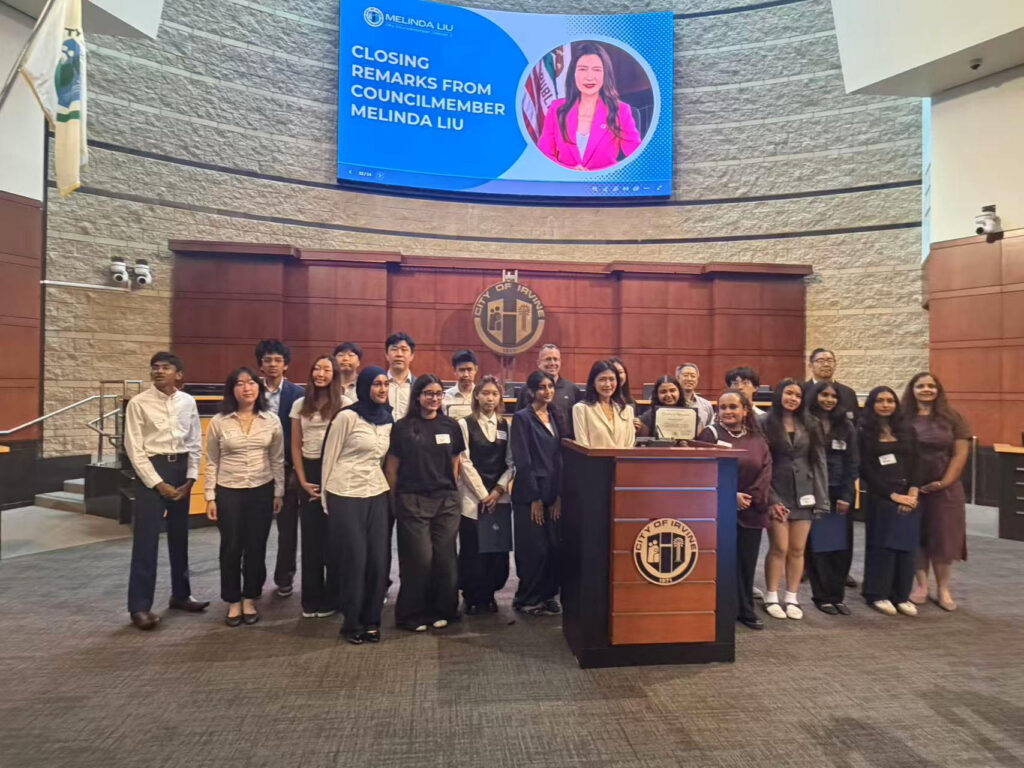
IvyMax congratulates Terry Hsu, Brain Mou, and Celia Wang on earning First Place at the 2026 OC Policy Pitch Olympiad. Together, they competed as one team representing the IvyMax Irvine Center and finished the competition as Team Champions.
Their achievement highlights critical thinking, communication, collaboration, and the willingness to step into a challenging competitive environment. The First Place result deserves celebration, but so does the process behind it—the analysis, teamwork, communication, and preparation required to turn an idea into a persuasive presentation.
Achievements like this demonstrate what students can accomplish when they are willing to take the skills they are developing and apply them in meaningful new environments. IvyMax is proud to recognize Terry, Brain, and Celia for this accomplishment and to celebrate the success they achieved together.
Inspiring More Students to Take on Real-World Challenges
High school gives students an important opportunity to explore. It is a time to try unfamiliar activities, discover new academic interests, learn how to work with different people, and gradually develop confidence in communicating ideas outside familiar classrooms.
Not every competition will end with First Place, and winning should not be the only measure of whether an experience was worthwhile. Competition teaches preparation, research encourages questioning, public speaking develops communication, teamwork requires listening, and difficult challenges reveal areas students can continue improving.
For Terry, Brain, and Celia, the 2026 OC Policy Pitch Olympiad ended with a championship. For the broader IvyMax community, their achievement is also a reminder of what can happen when students are willing to challenge themselves, apply their skills beyond the classroom, and work together toward an ambitious goal.
Congratulations again to Terry Hsu, Brain Mou, and Celia Wang on their First Place finish at the 2026 OC Policy Pitch Olympiad.
Explore Student Opportunities at IvyMax
IvyMax encourages students to explore academic, research, enrichment, competition, and leadership opportunities that help them discover interests and strengthen meaningful skills. These experiences can give high school students new ways to apply what they learn, develop confidence, and prepare for increasingly complex academic challenges.
For students and families interested in learning more, IvyMax offers academic and enrichment opportunities designed to support students as they identify their strengths, explore potential interests, and continue developing beyond the traditional classroom.
By submitting this form, you are consenting to receive marketing emails from: IvyMax, 41111 Mission Blvd., Suite 200, Fremont, CA, 94539, https://ivymax.com/. You can revoke your consent to receive emails at any time by using the SafeUnsubscribe® link, found at the bottom of every email. Emails are serviced by Constant Contact
Interested in our program?
Complete the form below and we’ll quickly respond with detailed information, and answers to all your questions!